


Editor’s note from Mike: Today’s piece is a guest essay from Tom Critchlow, forward deployed engineer at Alephic and founder of AI Search Leaders who we interviewed back in early June.
Tom is taking the stage at BRXND NYC 2026 to provide a state of AI brand visibility you won’t want to miss. Tickets are available at the early bird rate of $749 through end of day tomorrow. If you’ve had the tab open in your browser, now’s the perfect time to go ahead and snag the ticket. Can’t wait to see you there.
Paris, 1889.
The Exposition Universelle (world’s fair) opens on the hundredth anniversary of the Revolution, the Eiffel Tower newly unveiled, rises above it - the tallest structure on earth and a testament to engineering confidence. That January, the King of Sweden awards Henri Poincaré a prize for progress on the hardest problem in celestial mechanics: the three body problem, three bodies, each pulling on the others. (Hold that thought.) And in Clermont-Ferrand, two brothers take over a failing rubber factory and form a company called Michelin.
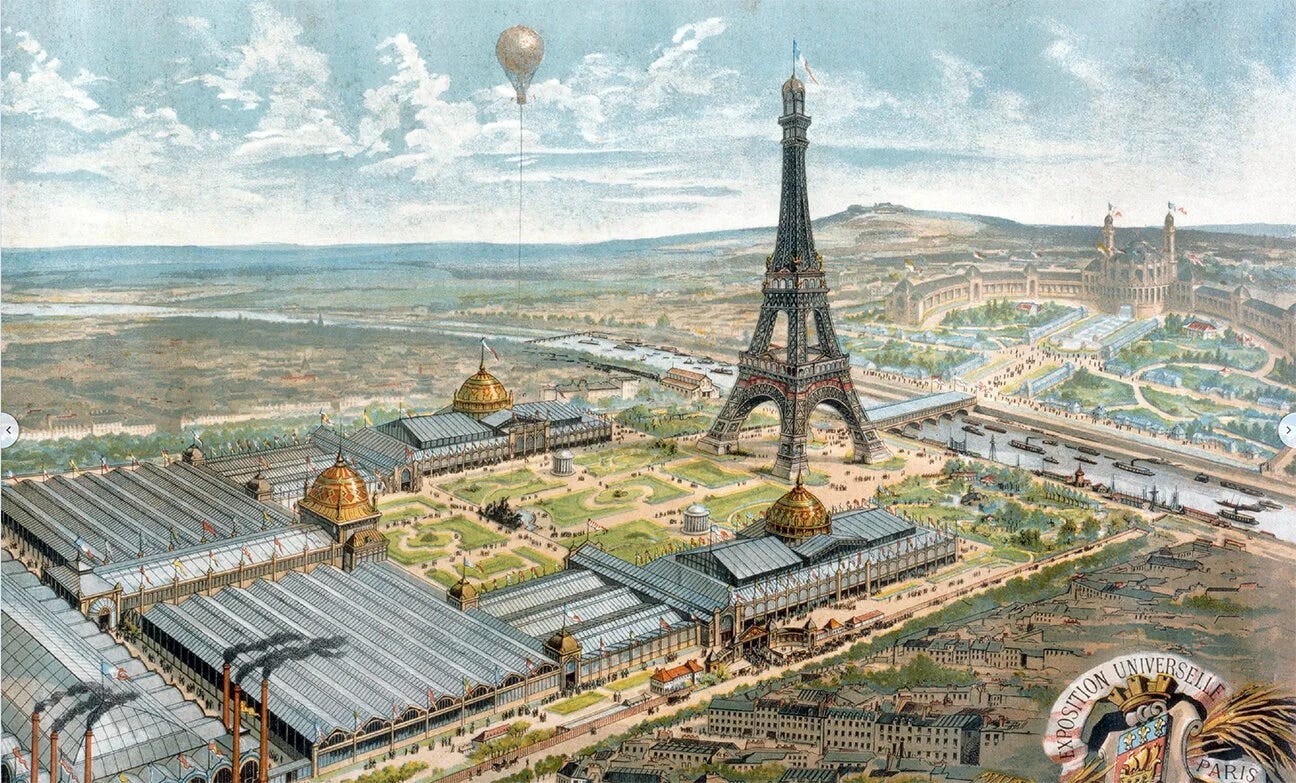
In retrospect, 1889 stands at the threshold of a century of management confidence: a belief that work could be broken into measurable units, organizations made legible - a world of future forecasting and annual plans. The Eiffel Tower expressed that confidence in iron while Poincaré’s work planted the seeds of warning from mathematics: even a system governed by known laws might refuse to yield a predictable future.
Working in modern corporate America in 2026, you can feel the chaos all around you. In my conversations with peers across industries the feeling is universal and the same themes emerge: management is acting poorly, channels are changing faster than companies can respond, customers are changing their behavior and everyone is producing (and being asked to consume) more work than ever before. The cohesion of work is evaporating - increasingly things don’t make sense.
Importantly, organizations, teams, and individuals have lost the ability to predict the future, and all of the scaffolding of “doing work” - annual planning, quarterly offsites, weekly status meetings - is increasingly feeling like theatre from an abandoned age.
Once again we are on the threshold of a new management era, ushering in… who knows yet? New ways of working with (and for?) AI. You can feel the doorway between the old world and the new world.
And perhaps no team feels this more viscerally than marketing teams - where AI is driving rapid change across three core areas: customers behaving in new ways, channels reinventing themselves and craft, the way work is made, is being completely rewritten. All three bodies are pulling on each other and the future dissolves into uncertainty.
Trying to predict the motion of three interconnected bodies is the definition of the three body problem that Poincaré worked on in 1889. He realized that once three bodies are pulling on each other, everything gets strange and prediction becomes impossible.
What does it feel like, in 2026, to lose the ability to predict the future? How do you coordinate work in an unstable environment? How do you navigate in times of chaos?
My theory is that the loss of prediction does not mean the loss of action. It means that the work becomes navigation.

Act 1: The Three Bodies in Motion: Customers, Channels & Craft
For marketing teams, the customer, the channel, and the craft are interconnected. The image of them as bodies in space exerting gravity is accurate: they exert force on each other. And all of them are changing at an accelerating pace in 2026.
Body #1: Customers
The old adage is that customer behavior changes slowly - that despite a technological revolution like the launch of the iPhone, it still took a decade for mobile usage to outstrip desktop. But I don’t buy it. This one feels different and the pace of change is astonishing.
ChatGPT and Google AI mode each have > 1B mau.
Pew 2026 says about four in ten U.S. adults use chatbots for information searching, and 38% of employed adults use them for work tasks.
AI is not just “information but now with natural language” - it’s about intelligence too cheap to meter.
Yes prompts are 5-20x longer than search queries (and getting longer). But the real shift is about delegation: customers delegating research and decision-making to LLM models. Where search touched the middle part of the funnel - useful for exploring a purchase decision and a small amount of discovery - AI is capable of recommending novel brands and categories to you, staying with you through your buying journey, and ingesting your preferences and constraints to get you to the final purchase decision.
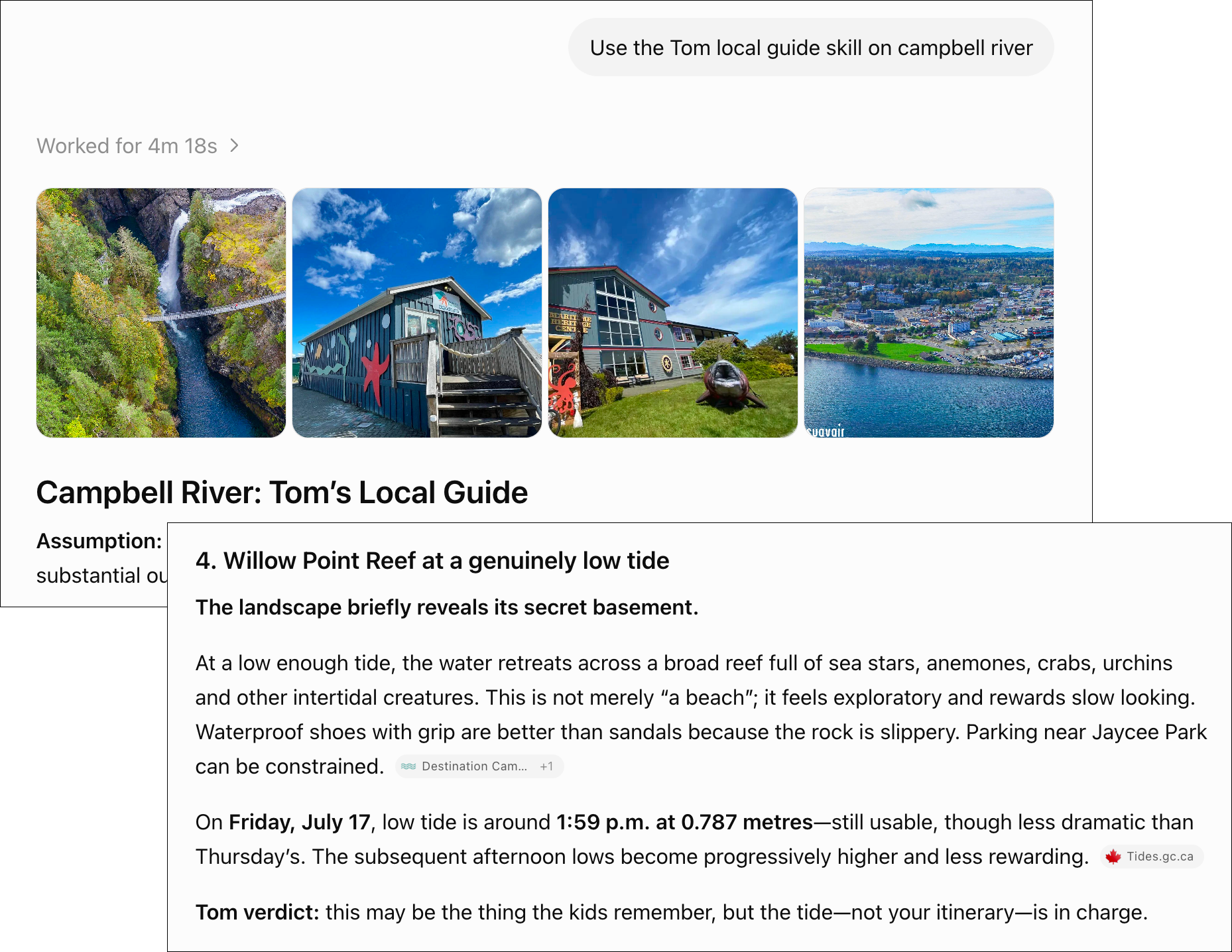
On a recent family vacation to Vancouver, BC I had a “tom guide skill” that pulled local knowledge, insights, and recommendations all from my phone. Combining my personal context (how many kids, when we’re traveling, what we like and when low tide is). Without that skill I wouldn’t have seen this rad purple starfish at Willow Point Reef:

Vacation photos aside, the point is that the customer is becoming agentic. Not in the breathless buzzword sense, but in a practical way: a growing number of people now move through the world with a kind of cognitive sidecar. A model that reads before they read. A model that compares before they compare. A model that can scour, summarize and synthesize before they ever reach your site.
Quantifying this change is hard, especially because so much AI influence is either zero-click or dark-click. But we know adoption is growing quickly, and we can feel the shape of the customer request changing.
This matters because a brand used to be interpreted mostly by people. Now it’s interpreted by people plus the machine-shaped memory of the market.
The first body in motion - customers changing behavior.
Body #2: Channels
The environment that consumers are living in is changing too. As McLuhan says, the medium “shapes and controls the scale and form of human association and action.”
Search and social - intention and attention - the two biggest channels are both undergoing complete revolutions because of AI. The medium is changing.
Search & the information economy
Search is the obvious channel to change because of AI - but the second order consequences are still playing out and certainly not stable yet. AI search (AI Overviews and AI Mode) rewrites the implicit contract between searcher, search engine and brand.
We’ve moved from a list of links in ranking position to an AI model that talks about your brand - it can qualitatively recommend your brand (or warn against!)
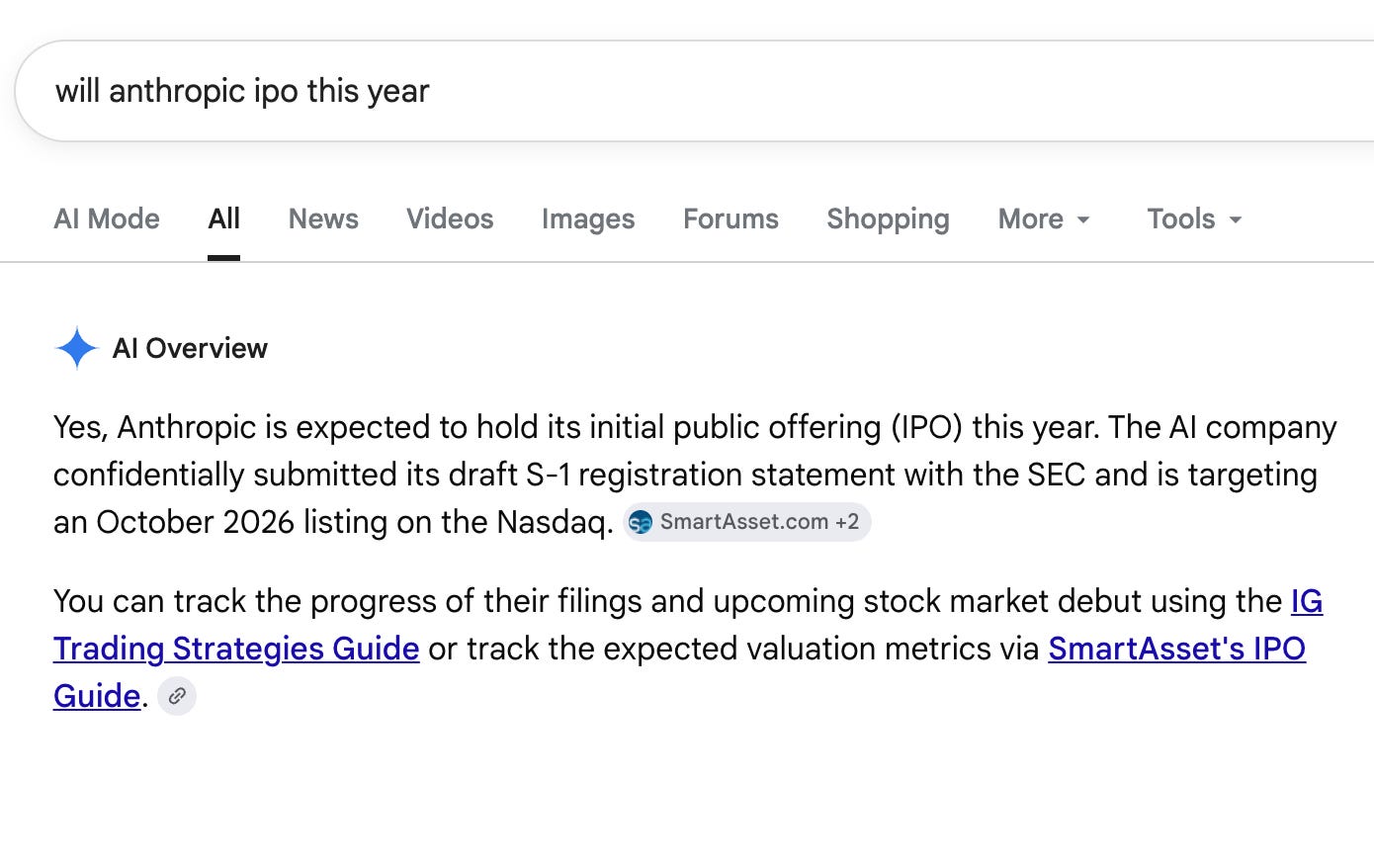
Like a new predator being introduced into a stable ecosystem, AI search has disrupted the natural balance and order of things. 79% of top news sites block at least one bot used for AI training, while 71% block at least one live search or retrieval bot.
In the old web, almost nobody wanted to block search engines. Now publishers are putting up walls and making fine-grained decisions about training, retrieval, indexing, citation, and value exchange.
Google has teased a fully agentic future vision of search at I/O, but how much of this comes to pass if all the content is invisible to Google’s crawlers? The stable ecosystem of search is becoming disintermediated and it’s not clear how the story ends. Content licensing marketplaces? New forms of content monetization? New copyright laws?
Social is becoming AI spam
Social, once a place to connect with real people, then a place to browse algorithmic feeds, has now become an endless slop slot machine.
Social has changed less because of what the big platforms are doing, and more because of what they are NOT doing. Facebook and Pinterest have been slow and lazy in dealing with their AI spam problems.
But it is not just sloppy, it’s actual spam. Motivated actors are actively spamming these platforms for profit, producing synthetic media at scale to harvest attention, clicks, affiliate revenue, or platform payouts.
This is not a marginal problem. In certain categories, spam can feel like more than half the feed. More fake than real.
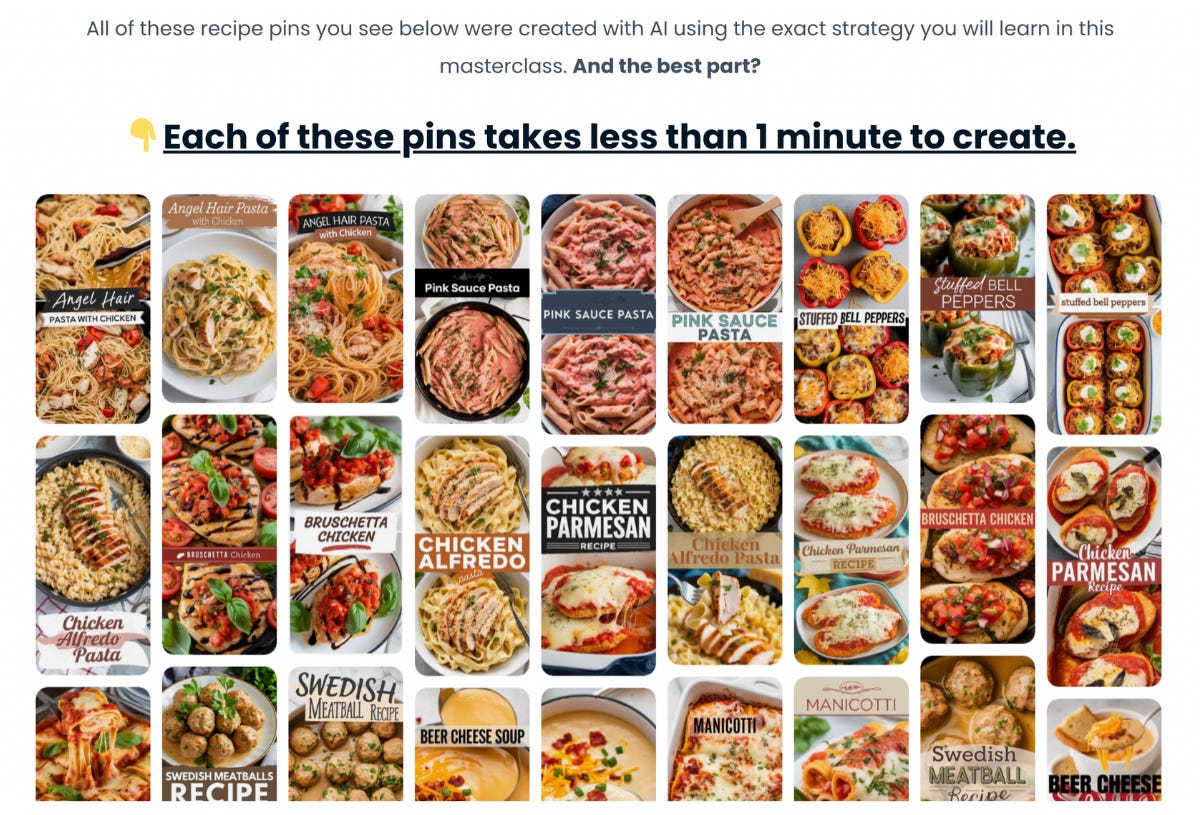
As the Guardian says “one man’s shrimp Jesus is another man’s side hustle”. And have you looked at LinkedIn / X / Substack lately? Pangram scores are being thrown around like red cards.
It’s slop as far as the eye can scroll.
(Worth noting that we are under-appreciating the flip side of this equation - explosion in creativity that is just around the corner as everyone has AI creative capabilities in their pocket. Knicks memes and animated pigeons.)
Two bodies in motion - customer behavior and channels both pulling on each other.
Body #3: The Craft
The third body is the way the marketing team itself works. The craft of work is changing.
It almost goes without saying that the world of work is changing, but we should not become numb to it. We are so early. While “AI” has been around for a few years now, we are really just getting started.
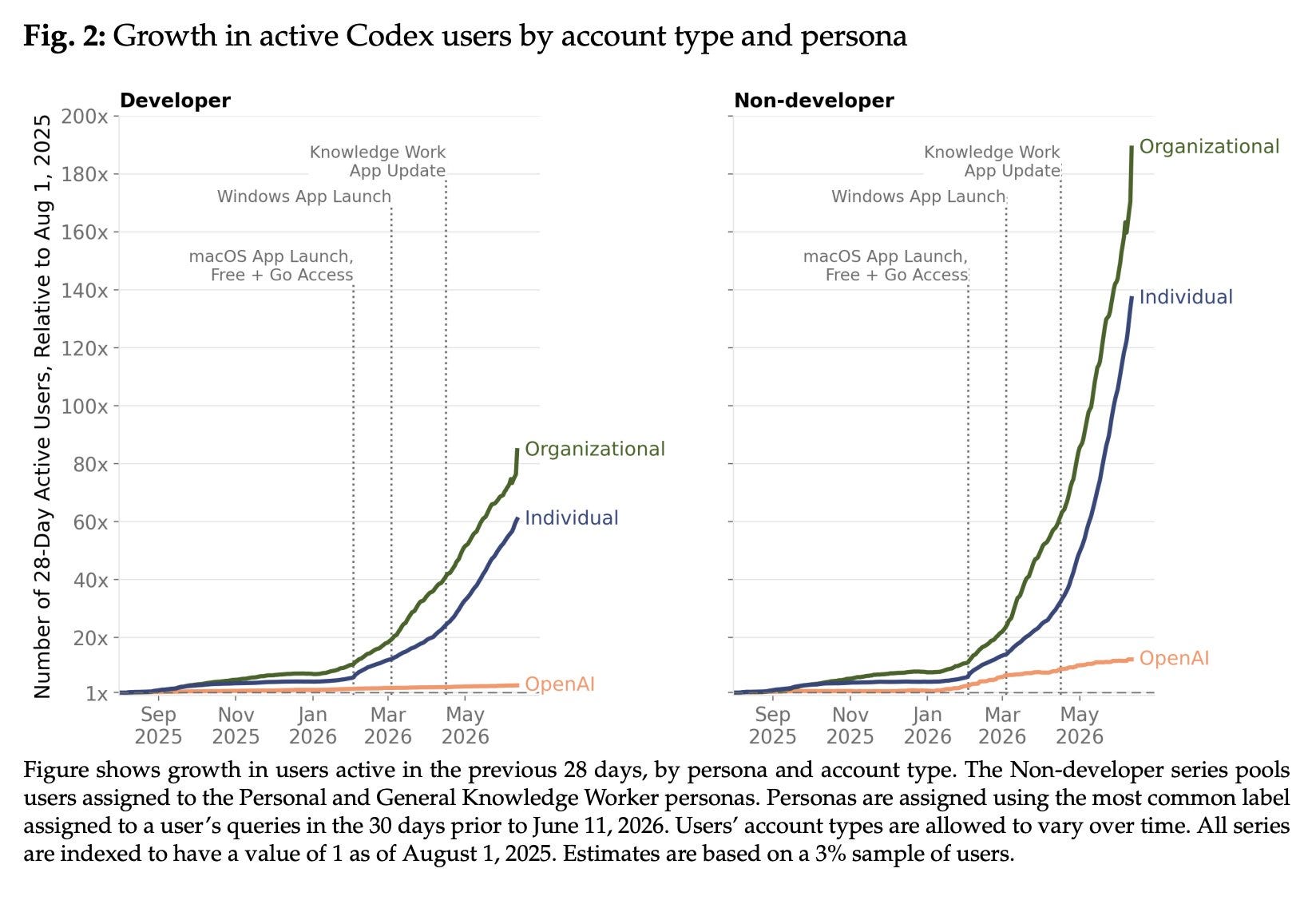
I think the advent of Claude Code and Codex was a bigger deal than the original ChatGPT 3.5 moment. AI usage has absolutely exploded because of these agentic tools. In May this year Cloudflare said it’s own internal usage of AI has increased by more than 600% in the last three months alone and Coinbase has seen token usage explode in just the last few weeks.
But the agentic revolution (Claude Code / Codex) outside of engineering teams is…. Maybe 2 months old at best??
Codex usage outside of engineering teams has just exploded, but only in May/June 2026:
If consumers have a cognitive sidecar with them, every knowledge worker now has a cognitive office with them, filled with personal staff: researchers, engineers, writers, designers.
For marketing teams in particular, 2026 has seen a Cambrian explosion in image and video capabilities, with SeedDance, OpenAI image models, Gemini, and so much more. Personally I’ve been enjoying generating, editing and producing video…. All in code? You can just ask an LLM to manipulate video files now. (see also hyperframes).
On the one hand the bar for creative output has never been higher, on the other hand you’re surrounded by slop cannons. Every knowledge worker is inundated by sloppy output and being asked to do more than ever - their old job, learn new AI tools and handle their coworkers 10x-ing their output.
So if the way work is being made feels new, different and strange - you are not alone. The two bottlenecks are now imagination and coordination.
All of this brings a sense of uncertainty. You can recreate workflows in AI, but the old workflows are out. Customers and channels are changing, so what new workflows do we need? How should the team be structured?
This is where the three bodies start pulling on each other and the future dissolves into uncertainty. If customers are changing and channels are changing, automating the old process is not obviously progress. You may simply be making yesterday’s marketing faster. Or worse, marketing to a customer that no longer exists in a channel that has changed.
So all three bodies are in motion: customers, channels and craft. The system has become impossible to predict.
What do you do about it?
Act 2: What kind of organization can act inside instability?
Organizations exist to solve coordination problems. Coase’s theory of the firm says markets are powerful, but using them is not free. You have to find people, negotiate, contract, monitor, remember, enforce, and decide. Firms exist because some work is easier to coordinate inside an organization than outside in the market.
AI changes the cost structure of coordination - individual throughput is exponentially increasing, but cheaper production is not the same thing as cheaper coordination! In fact cheaper production can make coordination harder - there’s more work to review, more mis-aligned output, more experiments, more variants than ever before.
More things that look done but are not actually decided. More things that look like progress but just place the burden on someone else to review and feedback.
The clock of coordination is the rhythm and rituals of sharing status (see: WTFS). Every organization runs on daily standups, weekly status reviews, monthly business reviews, quarterly board meetings and annual offsites.
But when the world changes the clocks change. Before the railroad, every town kept its own time - noon was whenever the sun said so. Then trains moved faster than town clocks, and we invented standard time so that everyone could stay in sync. And when the factory reorganized work itself, the first thing workers demanded was a new clock: back to 1889 - May Day was called in Paris in 1889, with workers demanding eight hours for work, eight for rest, eight for what we will.
New technology, new tempo of work, new clock. Every time.
If we accept the premise that your organization is going to be agentic - it’s going to be a mixture of agents and humans coordinating work there’s two ideas that become practical:
First, agents need context before they can be autonomous. Much like business analytics only works if you have a data lake, a shared context for all the data, maybe agents only work if you have a context layer. A shared, accessible layer of the necessary organizational context that is maintained and updated and agents can reference.
Second, human-made status dashboards are too slow for agents. The bottleneck is not production, but status. What needs working on, where is the project at? How do we adapt the status clock and tempo in an age of agents?
Railroads needed standard time. Maybe agentic companies need standard status.
We keep seeing these patterns at Alephic - the agentic layer only becomes useful after the context layer. Some examples from recent work:
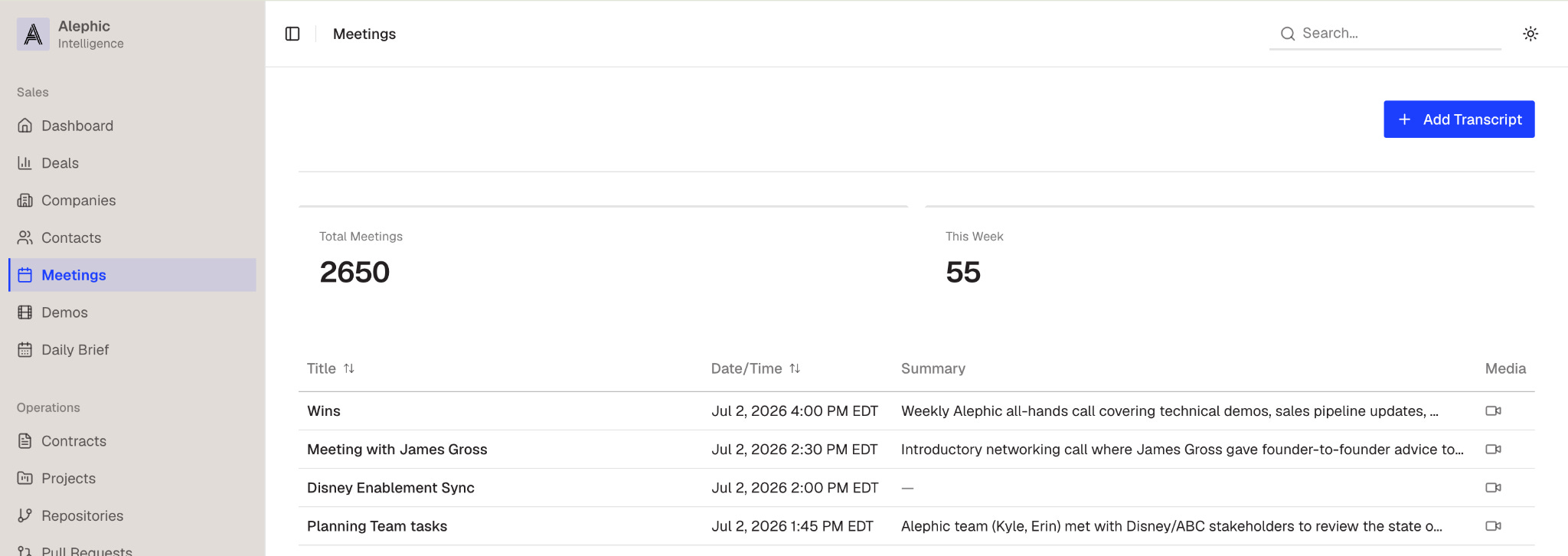
Alephic Intelligence is a context layer: it is a centralized layer that ingests all of our organizational context: every meeting transcript, every slack message, every hubspot record, every code commit. This is useful for humans to query and reference but more valuable for agents to query and reference - now that Alephic Intelligence is built we’re just starting to layer on top automatic project status:
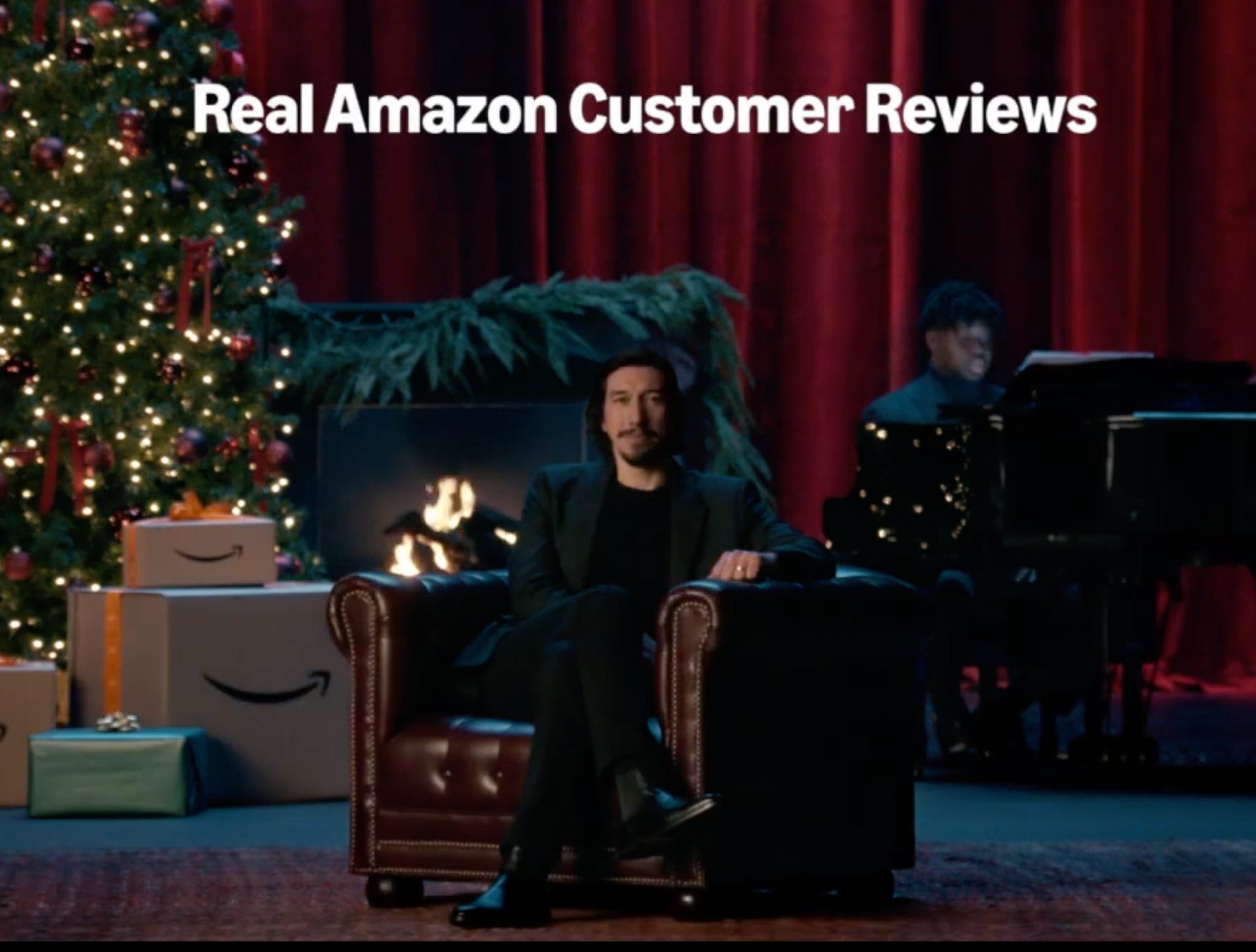
Amazon StarSearch is a project Alephic worked on with Amazon to import all Amazon reviews into a context layer. Once you have the context layer, it enables new kinds of marketing activity - like having Adam Driver read aloud a dutch oven review.
This is new kinds of marketing enabled by new technology, not automation of workflows.
Marketing Orchestration we’re working on a project with a Fortune50 brand to enable them to build a context-layer for their marketing team. A source of truth for all of the projects, status, actions, assets across hundreds of marketing team members and thousands of fast moving projects. We’re building the agentic layer on top of that to automatically move work around but you can’t do that until the context layer is built.
These examples all point to something practical for marketing leaders to invest in despite the uncertainty: build a context layer for your organization that is maintained, accessible to agents and leaves pheromone trails so agents (and humans) can operate on standard status time.
In my piece Of Termites & Tokens I argue that as the throughput of work increases you need to enable coordination through traces left in the environment.
Organizations have their own pheromone trails today: Slack threads, CRM fields, issue states, tags, transcripts, dashboards, source trails, approval markers, customer notes, analytics events, meeting summaries. In a low-throughput organization these are mostly residue. In an AI-accelerated organization they become the context layer that enables coordination via “standard status” (or token time as Justin McCarthy talked about with Noah).
If everyone can make more work, the company needs better traces. Better status. Better provenance. Better memory. Better ways of knowing what is alive, what is dead, what is approved, what is speculative, what is useful, what is merely plausible.
Otherwise the organization becomes a factory for its own confusion.
Of course, the interesting thing is not just ingesting the same context as everyone else (meeting transcripts, slack messages etc) but in ingesting the context specific to your business. For Amazon that’s StarSearch, the context layer of customer reviews. For another organization it might be a context layer of all the thought leadership produced globally by your organization and your competitors. For a biotech company it might be a context layer of all academic research, which lab produced it and who funded it.
AI of course makes this possible and easier than ever.
Act 3: Your Customers Are Lost Too.
There is another side to this. Your customers are lost too.
The sense of chaos and instability that we outlined above points to a feeling in the world: customers are as lost as you are. What do customers want when the world becomes hard to predict?
They want almanacs. Maybe.
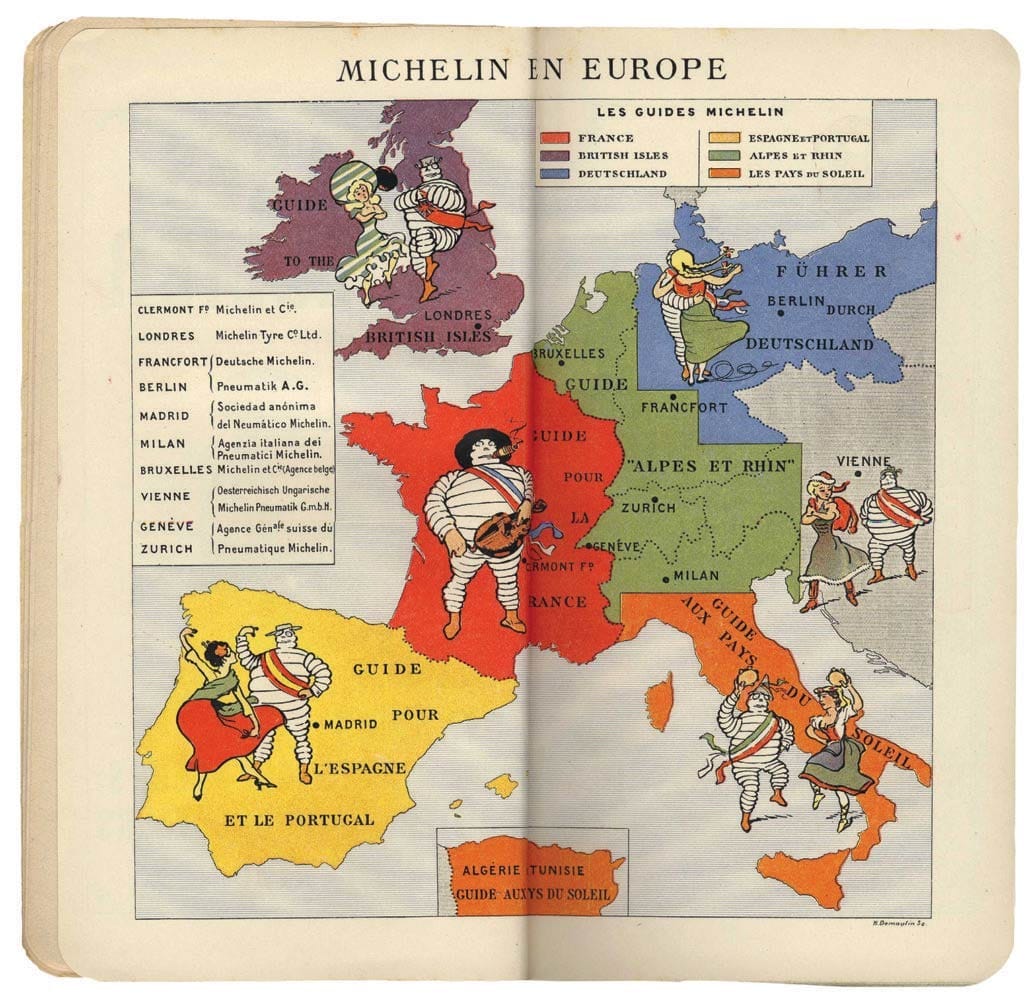
The year is 1889, the same year that Poincaré won the prize for his work on the three body problem, a tire company called Michelin was founded:
“It all started in Clermont-Ferrand (a small French town) in 1889, when brothers Andre and Edouard Michelin founded their world-famous tyre company, fuelled by a grand vision for France’s automobile industry at a time when there were fewer than 3,000 cars in the country.
To help motorists develop their trips - thereby boosting car and tyre sales and in turn - the Michelin brothers produced a small red guide filled with handy information for travellers, such as maps, information on how to change a tyre, where to fill up with fuel, and for the traveller in search of respite from the adventures of the day.”
Before the Michelin Guide was a restaurant guide, it was a guide for early drivers. A tire company realized that if you wanted to sell more tires, you might first have to make the world more drivable. So the guide gave people maps, hotels, repair information, and eventually restaurants worth traveling for. They expanded the imagination for what driving could be.
Consumers are inundated by products that have AI features that barely work. And billboards that advertise AI without a shred of context.
Maybe the best brand marketing of the next few years will be about creating field guides for a disoriented customer. Almanacs. Maps. Buyers’ guides.
What if a brand like Etsy built tools, education and almanacs on how to use ChatGPT for searching the vast Etsy library? (after all, Shopify’s catalog API is already allowing AI agents to search across all Shopify stores)
What if a brand like Target or IKEA built guides for using AI in interior design? Not the cheap version of AI-generated rooms but rather something more mundane, real and useful. An almanac.
What if a brand like Walmart built a guide for meal planning using AI? Educating consumers on what’s possible (recipe discovery!) and what’s hard (AI-recipes) in 2026 and how and where to use the AI tools to help.
Of course AI is amazing at shopping, interior design and meal planning. It is also terrible at all these things. For a brand to pull this off there has to be an honesty to the degree to which AI can be used in practical ways for practical tasks, and a recognition of the limitations and flaws of the current models (where those flaws and limitations are moving very fast!). Maybe marketing’s task is not just GEO (which is just SEO in a trench coat) but it’s about building your own evals and benchmarks for how well AI helps consumers in your category.
Before the brand marketing team at Walmart can build a consumer guide they need an internal WalmartBench eval framework for how good the various models are at finding products, searching their catalog and guiding customers in useful ways through their purchase journey for the categories that matter for your brand.
Maybe your customer needs an almanac.
This is, I think, the marketing opportunity inside the three body problem. If customers are changing, channels are changing, and craft is changing, then consumers are hungry for orientation.
How does the story end? The mania of new machines.
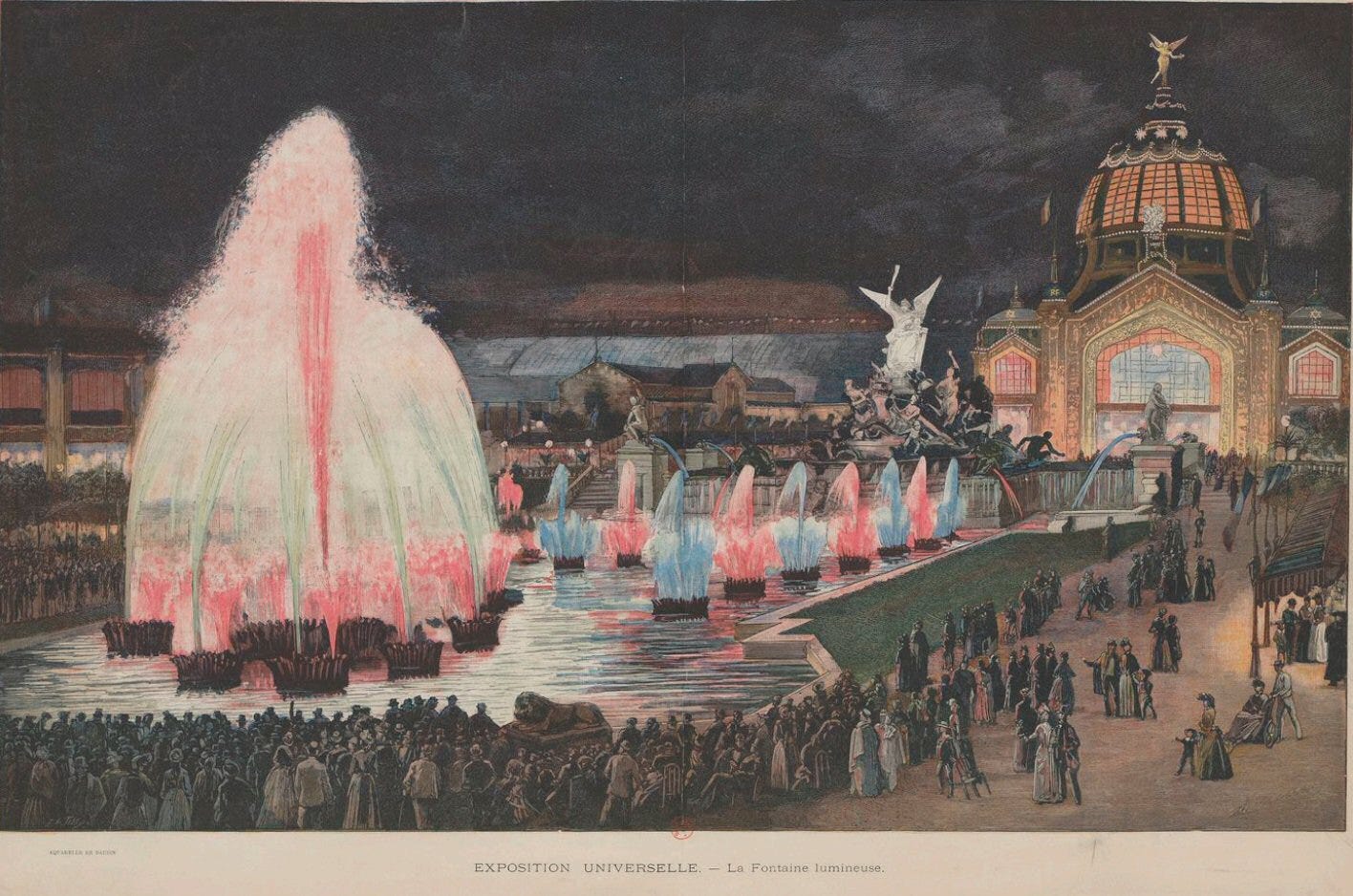
Let’s return to Paris in 1889, the Exposition Universelle but this time at night. It’s the first world’s fair to stay open at night because of the invention of electricity. Thomas Edison was a big feature at the fair and illuminated fountains with colored electric light captured the imagination of the people with a spectacle never seen before.
“In the basin, figures play in agitated poses, with tritons spouting torrents of water. The whole ensemble is highly decorative. Manufactured using new processes hitherto unknown in France, this fountain, illuminated each evening by electric light, shoots jets of colored water to great heights, which radiate into a dusting of alternating red, violet, blue, green, or yellow. The sight is truly miraculous.”
Meanwhile, just a few years before in 1882, Scientific American Supplement published an essay on electro-mania where W. Mattieu Williams argued for the separation from hype and reality around electricity - highlighting the mania of electricity making dead frogs move and people believing in re-animation.
Fast forward to 2026 and the essay by Nikhil Suresh: AI Mania Is Eviscerating Global Decision-Making feels eerily similar. I agree with Nikhil’s headline, that AI-mania is eviscerating decision making, but not the conclusion that all is lost. Chaos is all around, but we must learn to act regardless. New technologies always come with a breathless mania - our task (perhaps the uniquely human task?) is to separate the spectacle from the sublime. To discern between being tasked with animating dead frogs and illuminating dancing fountains.
The answer to a world that can no longer be predicted is not better prediction. It is better orientation. Prediction died in 1889 but navigation didn’t.
If you have any questions, please be in touch. As always, thanks for reading.
— Mike
The three-body problem metaphor is a great way to think about the moment.
The idea of almanacs implies that AI on its own isn't quite useful enough for laypeople--it needs a tool layer. Is this the next wave?
Great stuff, thank you.