


Longer essay today so I’ll get right to the most important point up top. BRXND NYC 2026 is in 44 days, space is starting to get tight and I’d love to meet many of you at the show.
If you’re on the fence about coming and have any questions on the day, please say hey at mike@brxnd.ai
Last Thursday, I spent the day with 250 fellow media executives at Brian Morrissey’s Rebooting Summit, a day that was largely built around pondering a single question:
What is the function of a media company in a world where AI increasingly sits between you and your reader?
It was a full circle moment for me— Brian originally introduced me to Noah and I’ve always been incredibly jealous of his linguistic panache (abattoir is my favorite word in his arsenal) and how effortlessly he can distill the milieu of an entire industry into 800 words each week.
It was a day of fascinating juxtapositions. About one-third of the both the main stage and hallway discussions pontificated on the existential conundrum of media as AI eats the world while two-thirds of the day dabbled almost whimsically in the sausage-y minutia of running media businesses. I spoke to one media leader who intended to retire after 2028 because they thought it would be “the last year of the business I know and love.” I also had a ten-minute discussion with a prominent B2B media CEO about the price of sandwiches at our respective conferences, spurred by our mutual appreciation of an exquisite chipotle aioli. It’s like the old Tolstoyian trope where even at the nadir of his unrequited love for Kitty, Levin still could appreciate exquisite weather.
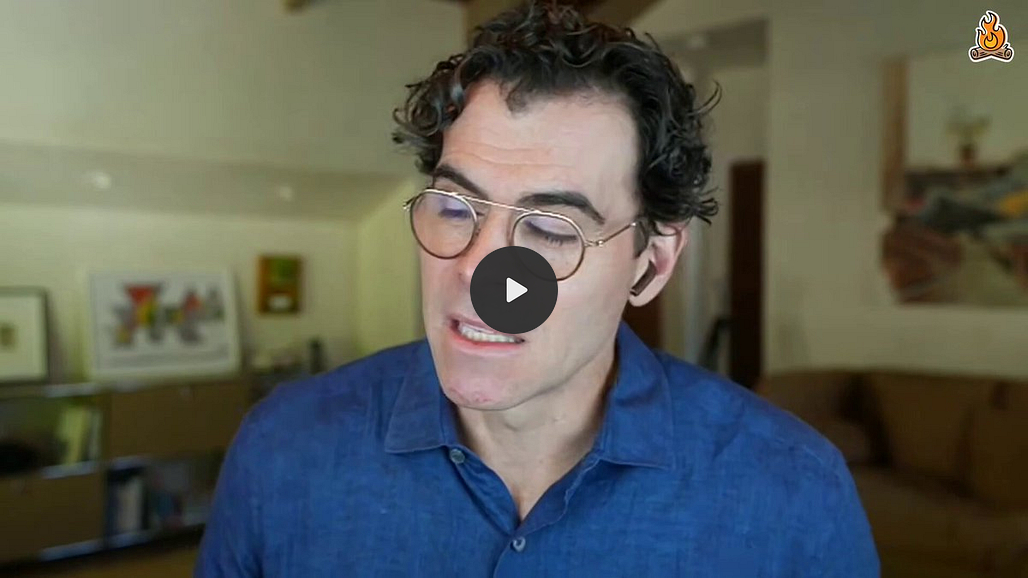
But far and away, the most powerful session of the day was Brian’s fireside with Nick Thompson, CEO of the Atlantic. Perhaps overly judgmental of the fact that he’s a guy who voluntarily does LinkedIn selfie videos. I was unfamiliar with Nick’s game as an AI pundit but within seconds, I found myself hanging on his every word.
Essentially, there are three possible scenarios Nick is planning for as he shepherds the Atlantic through the AI era and how he imagines the world may look in five years. While Nick is obviously speaking from his point of view as a media CEO, the worlds he lays out are worth pondering for leaders in any business and considering in the interest of future-proofing your own career. Note, I’ve editorialized the framing on these slightly and abstracted the takeaways a bit for a non-media audience.
Scenario 1: Precedented Times: AI is somewhat overrated in a practical sense, we soon hit the asymptote where the practical value of incremental frontier intelligence reaches zero and the processes of actually imbuing AI into the more arcane corners of American capitalism is even more arduous and cumbersome than expected. Something resembling ordinary times ensues for most internet businesses.
Nick didn’t use these words but I think of this as functionally the “AI as normal technology” hypothesis that has regained steam among many tech pundits. This isn’t a bubble at all— it’s actually a potentially bullish outlook where the gradual adoption of AI in the enterprises is a persistent tailwind for GDP growth. Ultimately, scenario 1 doesn’t really require any additional intellectual calorie burn to prepare for. We all sort of have a mental model for what better enterprise SaaS looks like.
Scenario 2: The AI Monoculture: Dario is essentially right about AI fully recasting society in its image and likeness and upending the entire structure of technology, capital, and labor. Most digital and technology businesses as we know them today will cease to exist.
In that world, Thompson suggested that the only real function of The Atlantic will be to own what is truly tactile and human. They’ll do more events, ship more print magazines and become something of an IRL town square for their readers, essentially abandoning the digital hustle altogether.
For most of us, I don’t think there’s a whole ton of purpose trying to game theory out a world where AI is essentially a Leviathan monoculture. Everyone’s got a plan until they get punched in the mouth. Things will just get unconscionably weird and somehow, we’ll adapt and find a way.
Scenario 3: The Great Disintermediation: In a cursory sense, the “internet” as we know it today will still exist in 2031 but it will no longer be the primary way people interface with technology or receive information. AI will be. The humble webpage will endure in some form but agents will become the primary consumer of web content and in turn, none of the existing business models of media will really be viable. For one, an ad— sold on a CPM with the promise that it will be seen by human eyeballs— will be a vestige of quainter times.
I call this The Great Disintermediation and this is the world that I believe executives in nearly every industry should be preparing for. Ultimately, publishers just got a two-year head start on confronting that future thanks to Google Zero. Increasingly, every brand will exist more and more as AI perceives it.
In just the last two weeks, we’ve really started to feel the acceleration of the great disintermediation rumbling under our feet. Muse, Meta’s consumer agent, is currently #1 on the App Store and it feels like Zuck is betting the entire fate of his company to will a mass-scale consumer agent into being. It’s the only bet to make. To date, Meta has built a $2T business with Apple’s boot perennially hovering over its neck. If Muse can become the dominant consumer entry point into AI, Zuck will have the most ubiquitous technology business of all time, one that can stay free to users in perpetuity supported by an ad engine with targeting capabilities that make the current algo seem pedestrian by comparison.


In turn, traditional aggregators of demand will start rapidly getting aggregated themselves.
And whoa boy, brace yourself, many new consumer agents are coming on the heels of Muses’s success. New models such as Jev that push the boundaries of the IQ+speed+cost will allow for new AI-native consumer apps / vertical harnesses that can sustainably handle multiple fast LLM calls in a way that wasn’t pragmatic before. That sway you feel in the force is VCs racing to fund a Stanford dropout building “Instinct for X.”
As I speculated in the “agentic commerce conundrum”, Amazon is none too thrilled about the prospect of third-party agents running amok on its site. The old quip about Amazon is that it’s a search engine with a warehouse attached. And it ain’t the warehouse that makes money. So this is what we get.
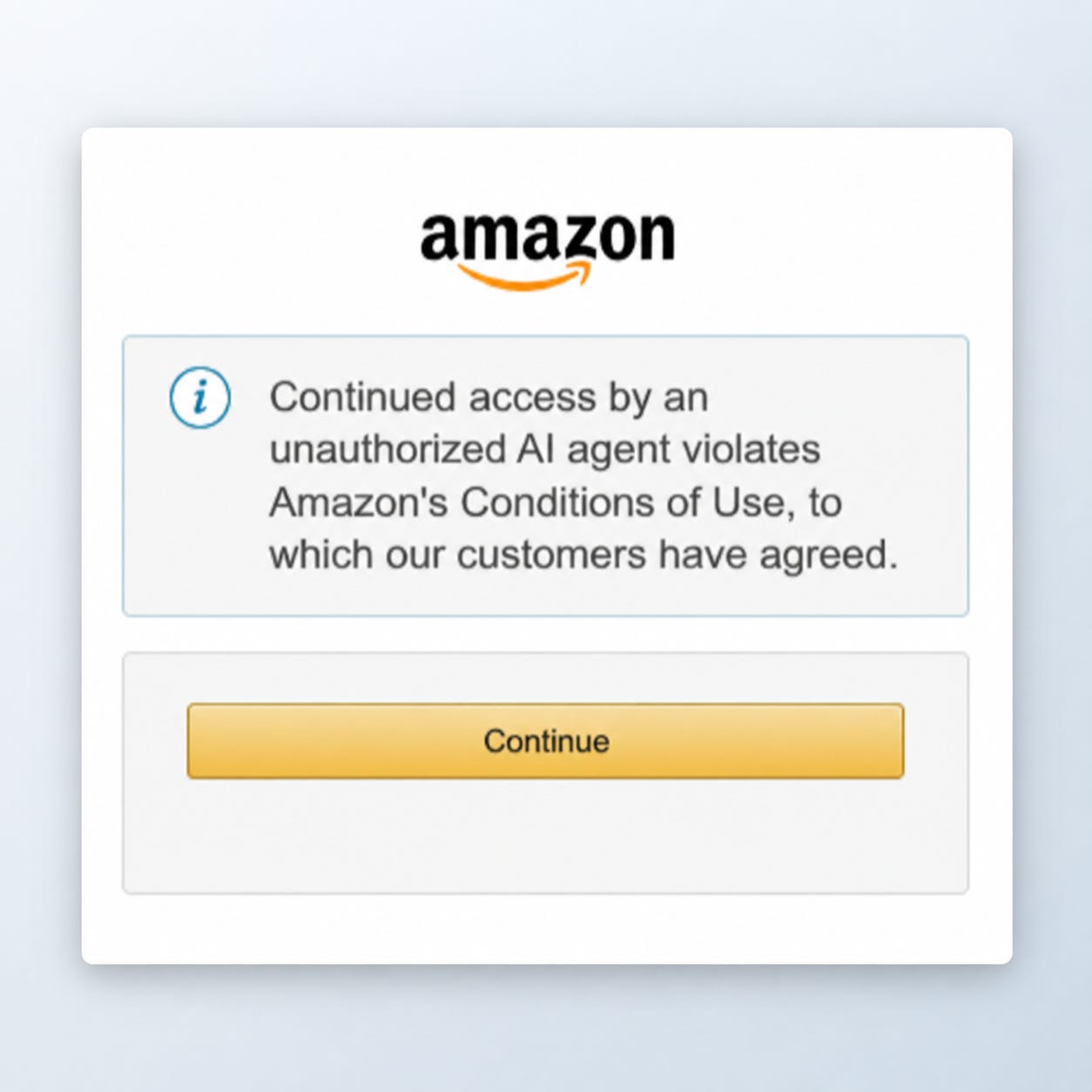
For Amazon, the calculus is reasonably simple— they’re betting that if forced to choose, the American normie is more dependent on Amazon than any Meta product or nascent consumer agent. I believe this is correct. But more broadly, Amazon needs to protect their $80B ads business. Until a model emerges where ads can effectively be served to third party agents at the point of inference, incentives are simply not aligned for Amazon to let these services operate on their platform. It’s a net negative ARPV proposition.
I’m sympathetic to Amazon’s position here— the company spent three decades building a logistics infrastructure that reshaped the global landscape to send things to your doorstep next day at horrifically low margins. The gentlemen’s deal with society is that they could subsidize the crappy business of eCommerce by simply creating more rectangles out of thin air to sell at 90%+ gross margin! I’m being a touch cheeky here of course but it’s worth remembering that agentic commerce of course only works if someone is willing to be in the pesky, low margin business of actually purveying goods.
While Amazon’s move is obvious, it will be interesting to see how other retailers and marketplace businesses with less leverage respond to the influx of agents now hitting their websites. If you were struggling to reach new customers, the great disintermediation might also be the great TAM expansion. The bots may not view your product pages or consume your “brand message” but they buy things all the same. If you’re a mid-market retailer, an agent might choose to shop from you even though their human never would have. The human would have just gone to Amazon.
Unsurprisingly, Shopify and Meta have teamed up to frame this as an “arm the rebels” moment for indie merchants.


It’s the right message to push. I’m genuinely excited about the breakout potential for smaller brands that the rise of agents could provide, especially during this Wild West period where it’s hard to discern exactly what value propositions consumer agents respond to. Thanks to Shopify’s Catalog API, a tiny boutique store in Kalamazoo now lives at the point of inference in millions of daily agentic queries alongside the largest brands in the world without having to pay a dime in paid advertising (yet!) to reach said agent. This will all be frustratingly opaque and weird at first but I suspect we’ll see some indie brands randomly hit it big on the early agentic slot machine.
Going back to media, Brian posited a hypothesis on stage (that we actually discussed together on his pod back in early 2025) where a few select premium media organizations like The Atlantic and The New Yorker will keep a direct relationship with readers while the vast majority of outlets will become wholesale sellers of information to AI. While this framing sounds dystopian at first blush, it’s not like the status quo is enabling thriving media business models. The SEO and programmatic chophouse of the before times didn’t always exactly incentivize Pulitzer worthy journalism. A world in which analysis backed by shoe-leather reporting and high quality service journalism is effectively commissioned by LLMs might well create a healthier information ecosystem for the proverbial average reader than the search and social arbitrage era.
Disintermediation is not synonymous with death. Sometimes, it’s just a new means of distribution.
In 44 days, about 400 of us will gather at the Times Center for BRXND NYC 2026 amidst this world where AI is fundamentally reshaping how consumers build preference and purchase brands. As we prep for the show, the question that has lived rent-free in my head is nearly the same one that permeated The Rebooting Summit, just for the demand side.
What is the job of a marketing leader when AI increasingly sits as the arbitration layer between a brand and its customers?
Going one level deeper, where do marketers have to make zero-sum choices between what message will resonate best with humans and what will be most favorably perceived by machines? Where do I tactfully fight the great disintermediation to make sure I directly own my narrative vs. where do I try to persuade the algorithm?

These are now the same questions that an entire generation of software businesses must now confront. 3,000 miles and a world away, Dario took a quick break last week from pacing the frontier and building wet labs to get brutally framemogged by Mark Benioff at Dreamforce. There’s a strong case that the Benioff towering over Amodei…and the many derivative memes it inspired like the below should be TIME’s photo of the year. And wait, guess who just happens to own TIME?
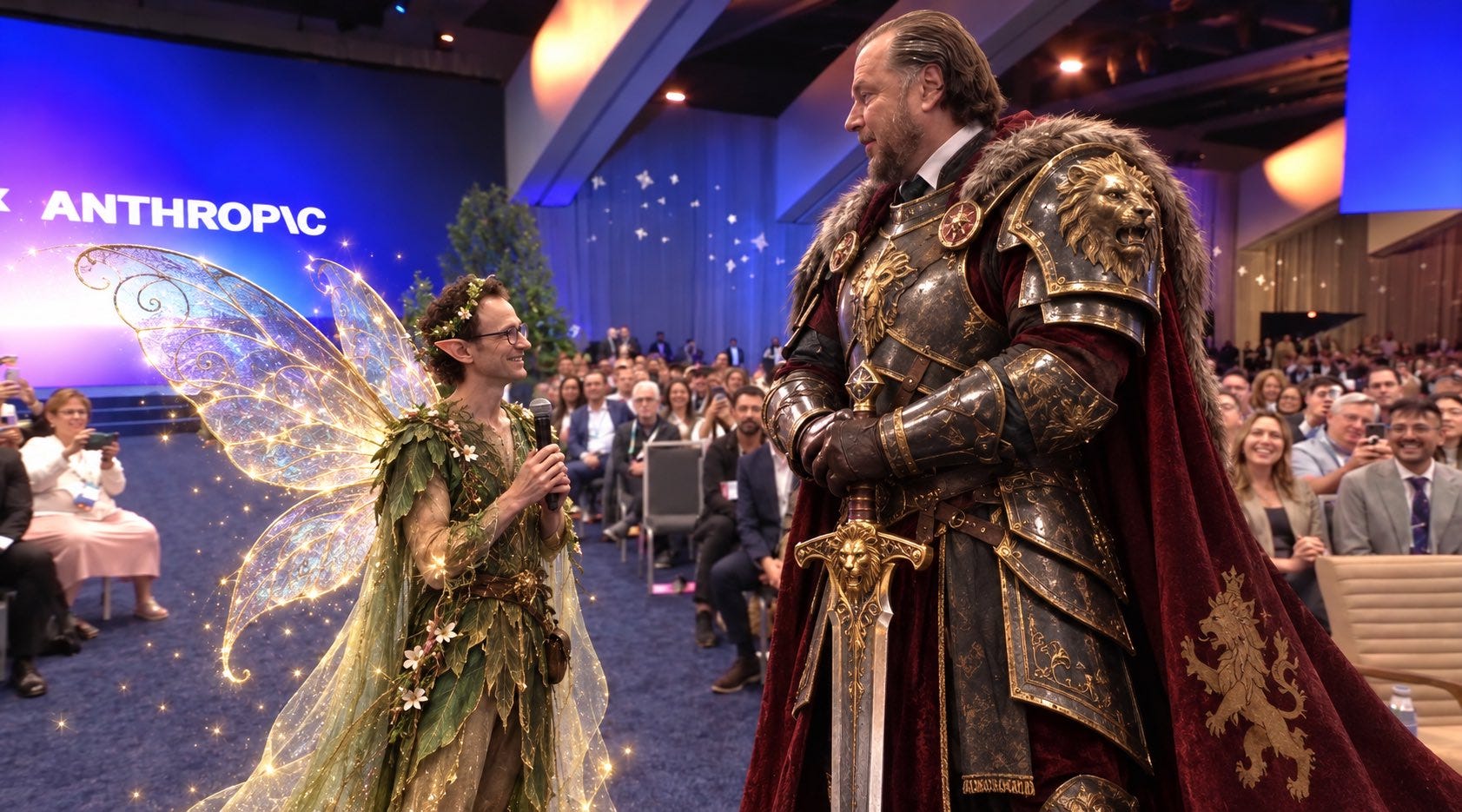
But make no mistake about who is the alpha dog here. Anthropic took the definitive company of the SaaS era and made it a plugin.
As Ben Thompson wrote last week in Stratechery, it’s unquestionably the correct business decision for Benioff to make, largely because his product living within Claude is ultimately a better user experience. Liberation from having to spend multiple hours per day in a CRM might as well be AGI for revenue professionals! But while Salesforce is an easy punching bag, the same dynamic is playing out against software that we thought we loved. From our company Slack recently:
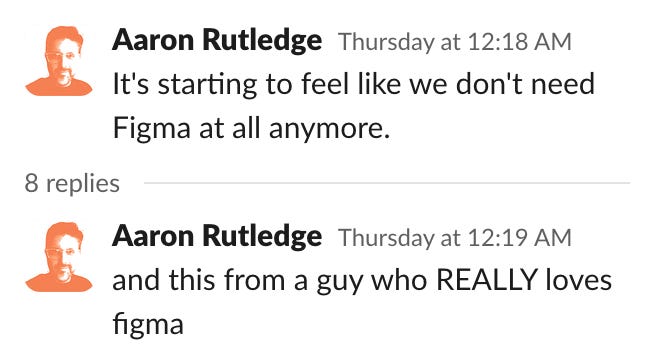
I now rip Clay and Apollo enrichments directly from Codex with nothing but an API key. From a pure user perspective, it’s an absolute dream. I don’t have to learn an esoteric new software interface. It’s just me, the harness and the task I want to get done with significantly less friction. I get the quarter-inch hole without having to even pick up a quarter-inch drill.
More than anything else, this is what the broad strokes SaaSpocalypse hypothesis of March-April got wrong. Pardon the Claudeslop syntax of this sentence but the best software businesses were almost never selling the front-end workflow. They were selling a job to be done. Fortunes will now be made moving that job from the browser to the harness.
Towards the end of his fireside chat, Nick delivered a line that drew by far the greatest applause of the day. When asked what he’d say to the frontier labs, he replied:
“Build a system that keeps a free, thriving media ecosystem going and it’s better for you if that happens.”
I agree wholeheartedly with his argument-- if quality media cannot sustain itself, AI becomes a Malthusian trap. But zooming out, it’s hard for me to adequately express how much of a breath of fresh air it is for a media leader to frame the importance of their business in simple utilitarian commercial terms rather than a sad appeal to pathos.
Going back to my journalism school days, far too many media people I met harbored a weird combination of grandeur about the importance of news but were bitterly cynical about any attempts to make journalism viable in the digital age. What will mystify me until the end of my days is that a considerable portion of my professors and early mentors seemed to fancy themselves victims of the plight of media rather than possible participants in the story of saving it.
Speaking as a media professional and a citizen, I’m incredibly grateful that the industry finally has innovative leaders out front who are willing to think first principles in the face of seismic disruption to their business. But the broader point here applies to business leaders of all stripes as AI becomes the internet.
You can hope for whatever future you’d like but I’d be actively planning for a world in which most work, commerce and digital leisure is mediated by AI. The great disintermediation is here.
If you have any questions, please be in touch. As always, thanks for reading.
— Mike
This was a truly satisfying read. Thank you! ps: I looked up abattoir. Love learning a new word.