


You’re getting this email as a subscriber to the BRXND Dispatch, a newsletter at the intersection of marketing and AI. Forward it to a friend, they’d like that, and so would we.
The Machines Eat Media Buying
Media buying is a weird industry. 23-year-olds making $30K/yr sit courtside at NBA Finals games or are flown VIP to Coachella and control millions of dollars in ad spend for the world's largest brands. This dynamic naturally creates a lot of arbitrages in which a litany of middlemen book billions of dollars every year in revenue. That margin is someone’s opportunity. In this case, it is Zuck’s.
Last week, Meta released their ads MCP and CLI, providing direct, authorized access to help manage your Meta Ads account through natural language in Claude or ChatGPT. It’s early, limited access, and has major initial limitations around attribution, but a genie has been released here that isn’t going back in the bottle. We’re likely quarters, not years, away from agents doing most of the hands-on key media buying across all major ad platforms.
In retrospect, it’s somewhat surprising that it took this long to get here. Google’s Performance Max and Meta’s Advantage Shopping Campaigns already took much of the edge off pure media-buying and targeting wizardry, placing the premium on creative and copy. But they didn’t disrupt the full media buying industrial complex on as much of an existential level. Like the almighty billable hour in law or consulting, the traditional agency media buying fee and revenue tied to headcount staffed against an account proved stubbornly resistant to change, even as algorithms did more and more of the work.
At the beginning of last year, the best hands on keys marketer I know texted me to say “there’s no alpha in everything I know in growth marketing anymore. The platforms do everything now.” He reimagined his professional identity, leaned hard into building marketing systems in early versions of Claude Code and is doing great. The growth marketing workflow of the future looks something like this:

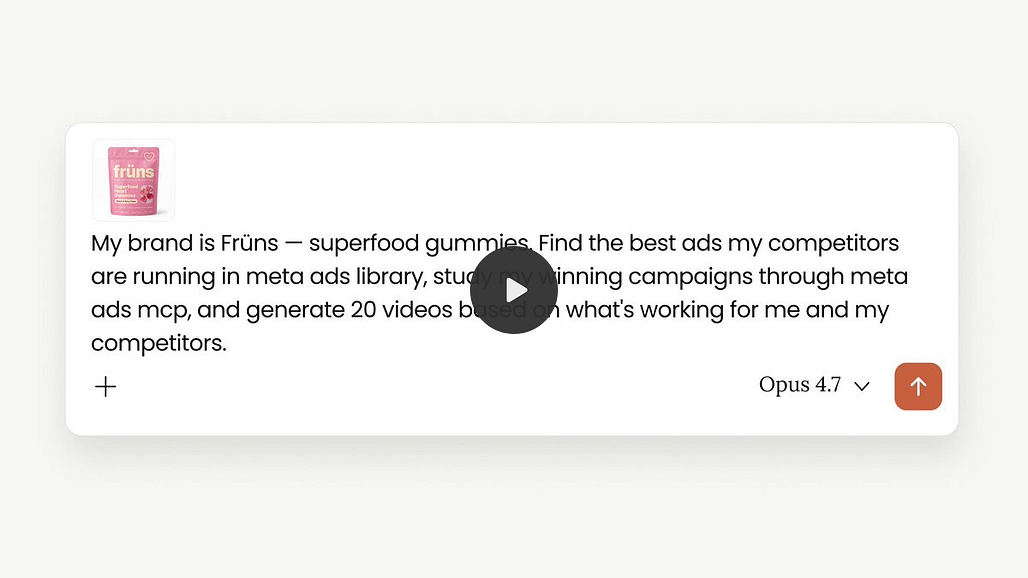

Ultimately, agents serving as media buyers is another case of AI acting as more of a mirror than a crystal ball. Agents might not be able to functionally “do” much net new that the existing ecosystem of APIs couldn’t already automate. In fact, Meta’s Marketing API still has far more functionality than the MCP. But the form factor of simply being a prompt away from having AI do the work lays bare how little friction there should be between buyer and seller. The proverbial emperor has no clothes moment.
When the Meta MCP news broke, I called up Michael Beebe, CEO of Dstillery and long-time analyst who spent two decades covering the TMT sector for the top financial institutions in the world. His broader take on the moment we’re in resonated deeply:
“The AI tsunami will overcome the inertia that has made media buying more manual and less efficient and effective than it could be. There are lots of parts of the supply chain that are too opaque, complex and fragmented for human media buyers to optimize.
AI will solve that last mile problem and allow advertisers to optimize toward parts of the supply chain that drive premium outcomes, or true "advertising alpha.”
The question for anyone now building in this ecosystem is whether you fight tooth and nail to preserve the externalities where you currently collect margin or if you think first principles around where you help marketing leaders find new alpha in the AI era.
Here, it bears mentioning that The Trade Desk’s stock is down 85% since December 2024 and its chief strategy officer just decamped for OpenAI. If the open web was “whistling past the graveyard” in 2024, it is now starting to pick out its dirges. A few large platforms call the game.
Meta, microcosmic of all of the big tech players in this regard, is ultimately positing a world where two things are true:
1) AI systems can run the entire full-stack process of running ads for businesses, no experience necessary. From Meta’s Q1 earnings call:
“We’re building AI systems that can basically run the entire advertising process for businesses…where you can come to us, tell us what your objective is, connect your bank account, and then we’ll just do the rest. That includes everything from generating the creative, to targeting, to optimizing, to measurement…”
2) For those who still want to maintain more sophisticated “control”, AI will do that too, just via bespoke agents marketers build rather than humans living in ad managers. Effectively, Meta is saying media buying is a space where even the last mile of manual work will be abstracted away. The top echelon of growth leaders will find their edge effectively by building smarter context engines and harnesses for agents.
Ultimately, Meta is trying to empower every marketer to become just good enough of an arbitrageur to maximize their own profits. The best scenario for Meta is that you can put $1 in and get $1.01 back (effectively in post-margin ROAS) to spend ad infinitum at the highest possible take for the platform.
It’s more or less the same formula that has catapulted AppLovin to be a $160B market cap company ($20B more than Shopify!) on mobile gaming arbitrage and is what OpenAI is trying to speedrun to make ChatGPT a $100B ads business by 2030.
The most enduring impact of AI in marketing is that it will make driving “just good enough” performance cheaper and easier than ever. Is that good enough?
Marketing chef’s kiss to….Wispr Flow
Wispr Flow–the buzzy voice-to-text app that is turning all of Silicon Valley into always-on, mobile raconteurs—hads had an extended bit viral branding moment on X over the past couple of weeks. The company ran an out-of-home campaign on the backs of rickshaws in Bangalore, where residents spend….a lot of time stuck in traffic, starting right at the back of the ‘shaw in front of them.


Mobile OOH is a consistently slept on category, and this campaign was generally brilliant, but it’s even savvier than it first appears. The best demo I ever took when I was brand side came from Adgile Media, a company that runs ads on trucks for brands ranging from Glossier to Planet Fitness. Their founder, Tom, opened by asking what I thought the best color for OOH ads was. It’s purple, by far the least naturally occurring color in nature, and thus the most prone to catch the eye.
I have no idea if Wispr Flow’s marketing team knew this, but there’s a funny thing about great companies. Great companies are great precisely because they sweat the details on a multitude of random, little, esoteric things. Bravo.
And one more to Pasta Garofalo
A belated Happy Mother’s Day to all the moms in our audience! You are heroes in everything you do.
Yesterday’s Mother’s Day meal in casa Mallazzo was an extra indulgent baked ziti, triggered by a brilliant act of marketing from one pasta brand. For the record, I explicitly reject Clay founder Varun Anand’s claim that baked ziti is a “low ceiling” food. If anyone else feels the way he does, email mike@brxnd.ai for a recipe that will change your mind.
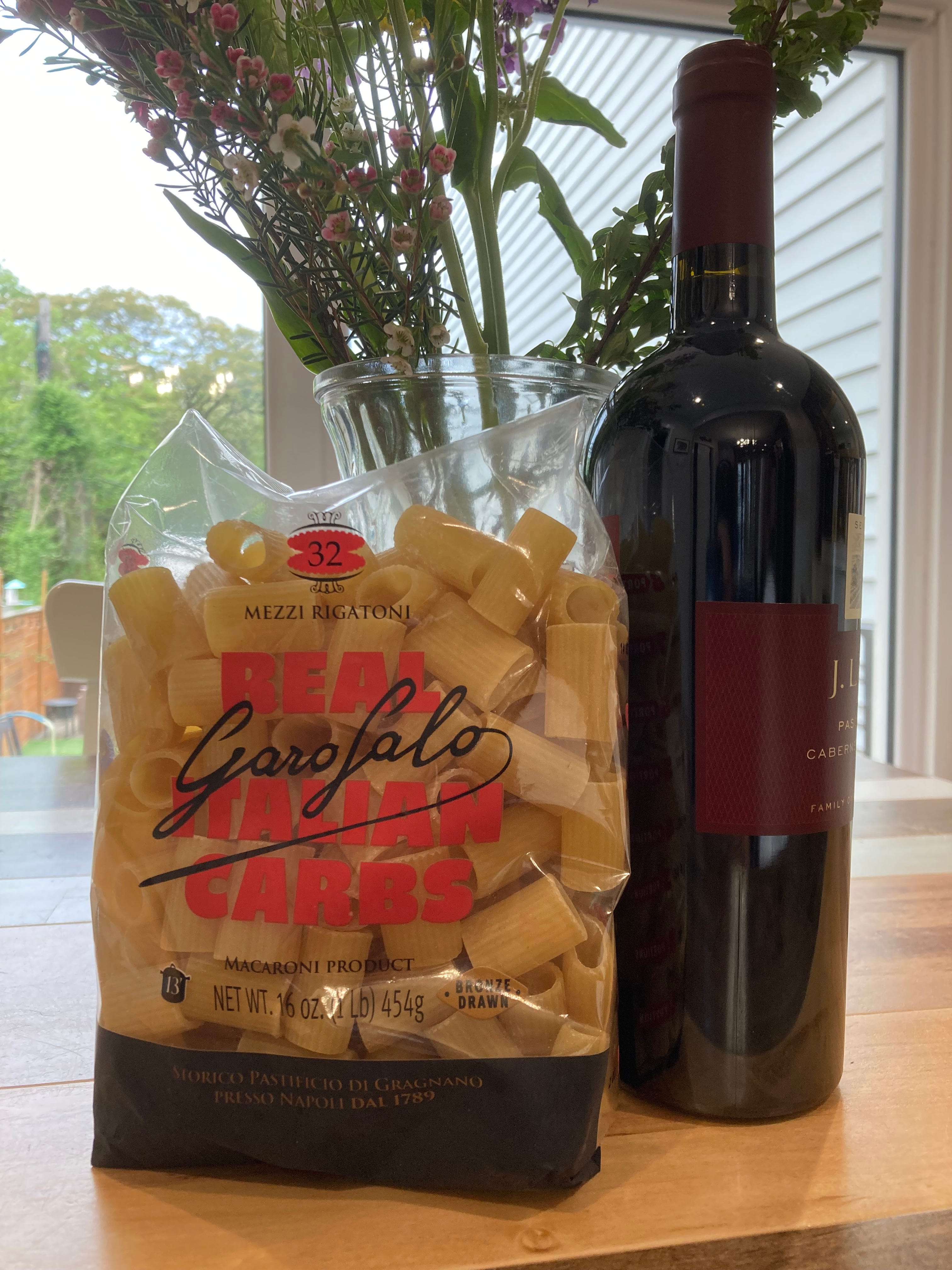
Garofalo is currently running the best yearlong campaign in CPG that I can remember for quite some time. Their packaging is emblazoned with “REAL ITALIAN CARBS” in big red letters on the front. It works perfectly on both a visceral and subliminal level. Visually, the striking letters jump off the shelf in a sea of homogeny at the pasta aisle. But it gets even more clever as you dig deeper. The copy on the back of the package closes with:
”Born in Gragnano, the birthplace of pasta, Garofolo has been crafting the real Italian carb for 200 years. Italian carbs are different. Don’t count them, give in to them.”
Unlike some other brands, Garofalo sells the exact same product in both the United States and Italy. Doubling down on this distinction hits because so many Americans tell the same cliche story of going to Italy, eating nothing but indulgent pasta and coming home five pounds lighter. It’s always the superior food of course that is the reason and has nothing to do with the fact that they walked 20,000 steps per day with not a care in the world :)
But there’s also beauty in the simple counter-positioning. In an era where big CPG is pushing Pop-Tarts PROTEIN, carbs don’t have to be the eternal enemy.
If you have any questions, please be in touch. As always, thanks for reading.
— Mike