


We’re down to 86 days until BRXND NYC lights up the Times Center on November 5th! Putting out one more call for speaker submissions and sponsors before we lock in the final agenda soon. Can’t wait to see you all.
For those interested in grabbing our last few early bird tickets. the link to purchase directly is here and in the button below.
Does the opinion vibe?
In the last few weeks, I’ve finally gone headlong into vibe coding, embarking on a poor man’s version of the journey Ben Thompson has also been on. Along the way, I’ve built:
1) A leaderboard of GEO companies, which I wrote about in vol. 122
2) A job board for forward deployed engineering roles, the hottest gig in tech.
3) A gift finder for indie products called Almanac. This is made possible by the Shopify Catalog API, an incredible “arm the rebels” offering from Tobi and company that I highly recommend anyone passionate about commerce plays around with.
While these aren’t even low A-ball numbers among my Alephic peers, I’m proud of this little chart below:
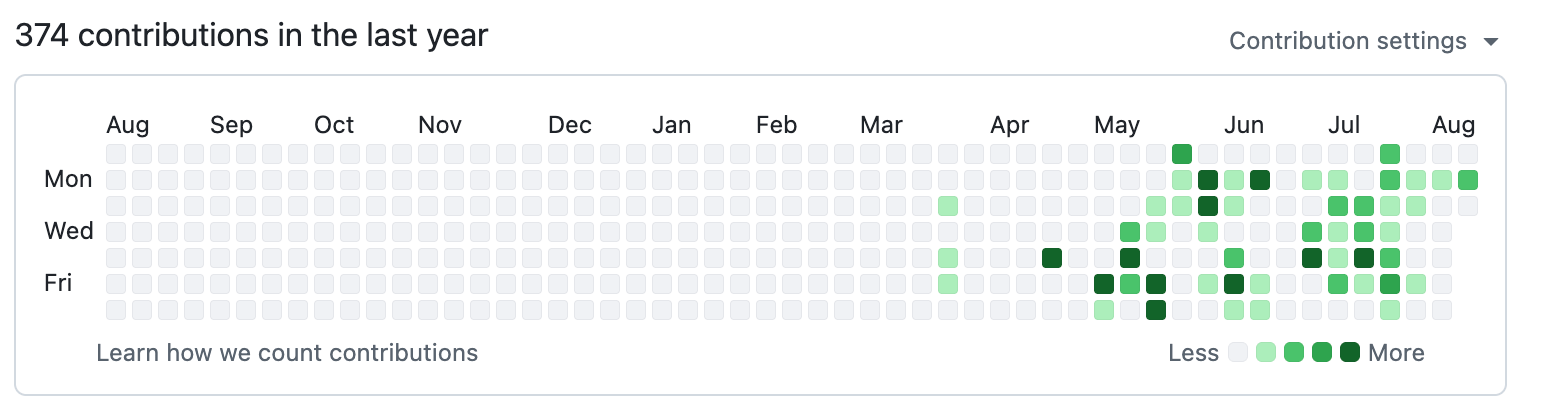
As I’ve experimented, I’ve found the cerebral challenge around vibe coding to be frighteningly similar to the agony and ecstasy of writing.
The misery of writing is that it exposes critical flaws that can be papered over when an idea is just an internal monologue in your head or spoken aloud in a board room. Tautologies masquerading as substantial ideas get viscerally exposed the moment they are manually put to pen.
Paradoxically, when done right, vibe coding is much more like the arduous process of writing manually than it is like generating text with an LLMs. Even though AI does the work of writing code, building even a basic application forces you to engage thoughtfully with what it is you actually want to build in a way that even most PRDs never did. When you ship pure slop, you can feel deep in your bones that the root cause is that you have no idea what you even set out to build. And more than ever:

In a marketing context specifically, the most interesting thing about vibe coding is that it shows you where the unique alpha in your data truly lies. Much of the SaaS-industrial complex that CMOs have relied on to date boxes you into a commoditized way of working built around their lowest denominator customer. Wrestling with the nuance of building even a basic vibe wireframe MVP of a software product you’d generally buy helps you deeply understand how tech should serve your brand, not the other way around. If your brand is known for its irreverent wit, it’s kinda crazy that you’d just use the same social media management SaaS as a bank!
So here’s my challenge to any non-technical marketer reading this newsletter. Before you consider purchasing any solution, ask yourself, “does it vibe?” By this I mean spend two hours in Claude Code or Codex describing the core problem you are trying to solve with a piece of software (or for that matter, an agency partnership).
Verbatim enter into the chat the precise problem space that is keeping you up at night. Here’s an example staying close to the GEO space:
“I am a marketing leader at a fast-growing wellness brand that sells products in multiple categories. While our brand is often cited by LLMs, recently, I’ve noticed that ChatGPT is making several factual errors when I run queries that surface my products. In other cases, information is correct but I don’t care for how my brand is perceived. Please help me design a lean solution to proactively surface factual errors, and places where LLM descriptors of our brand differ from the copy in our owned channels. Even better if we can build workflows where agents proactively seek to solve these problems once identified. Before you build anything, please ask me any clarifying questions to help design the best possible solution for my brand.”
The prompt below is a sort of rough amalgamation of a problem space (more on this in an upcoming post on The GEO Maturity Index) that Profound, Bluefish, AirOps and other leading GEO solutions have all recently launched products around. At first blush, it might be hard to nail down which would be the best fit for your specific use case. But my actually starting to vibe out the problem, you can at worst be a much more discerning buyer of software. Ultimately, you might even find there are more custom things you need to push a partner to build or just start to own yourself.
Who knows if vibe coding will ever emerge as a legitimate means of replacing core business infrastructure– for now, no sane marketing leader should attempt to rebuild Hubspot or Klaviyo from the ground up. For more bespoke builds, you certainly want professionals on the keys shipping any production level code. And for now, vibe maintaining software is a hell of a lot less fun than vibe building.
But the world is changing fast and fortune will favor the executives who spend $200 hitting the limits on a Claude Max plan in lieu of empty pontification. Those who embrace vibe coding will find themselves increasingly leading from the front and getting to velocity faster on their ideas by “seeing if their opinion vibe codes” alongside their teams. Like writing, vibe coding is thinking.
Cloudflare and Stripe Enter the Marketing Arena
One of my wackier face value takes is that Cloudflare and Stripe will be two of the five most important companies of this era for marketers, joining Google, Meta and OpenAI. My thesis here is pretty simple– if you own the (increasingly agentic) transaction layer of the internet, you will become the arbiter of how media is spent.
Cloudflare in particular has been on an impressive tear, last week launching a webMCP interface, agent-first browser, and open source OS as part of its agents week. Broadly, speaking I agree with this take from Daniel Miessler about how much they fly under the radar relative to the beachhead position they occupy in AI.


Most pertinent to marketing leaders, Cloudflare also unveiled an “AEO Visibility Dashboard” as part of its agentic readiness kit. Credit to Carl Hendy on X for giving us a first look at the interface.
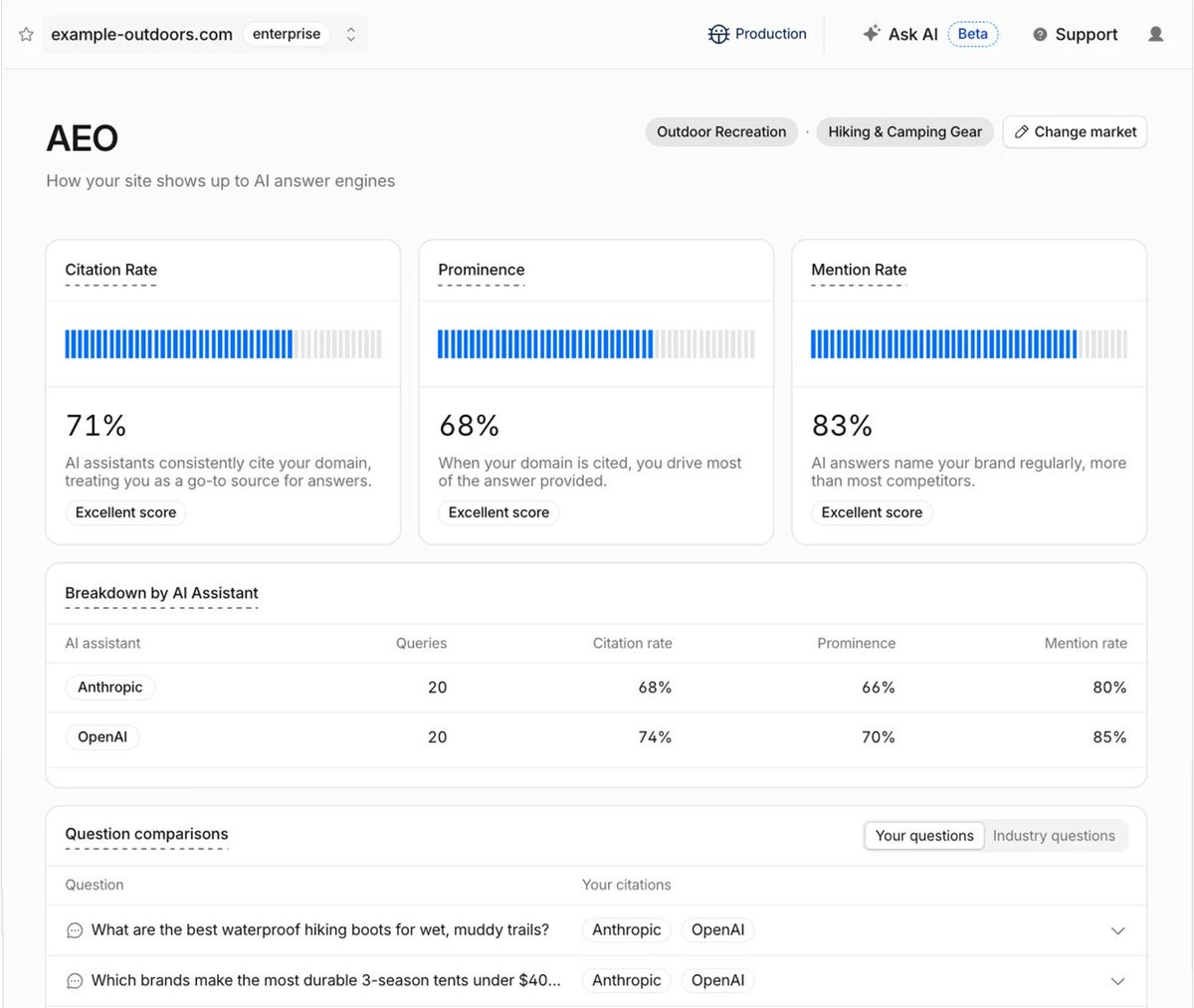
Cloudflare executive Lara Cohen wasn’t shy in positioning the offering against the status quo in the space. This is a slightly unfair quip, but one that will resonate deeply with many marketers nonetheless.


So what’s Cloudflare’s game here? Why launch the 30th tool in this category? Basic GEO / AEO prompt monitoring in and of itself is a commodity with limited utility but as part of a suite that helps turn websites “agent native”, it uplevels into a larger narrative around “a new business model of the internet.”
In the abstract for this year’s BRXND conference, Noah wrote “there is a not-hard-to-imagine future where the most important job of a marketer is to convince the model it is worthy of its user’s attention and dollars, and, even further, where the LLM just has its own credit card and makes the decision on a consumer’s behalf.”
Cloudflare is effectively aiming to be a full operating system for brands navigating this future state, an extremely lucrative lane and a potential welcome dose of ibuprofen for marketers currently navigating disparate technologies across AI search and agentic commerce readiness.
Deeper in the throes of Twitter, Stripe also seems to be experimenting with features aimed towards marketing leaders. From Nigel Yong, here’s a snapshot of attribution built directly into a Stripe subscription page.
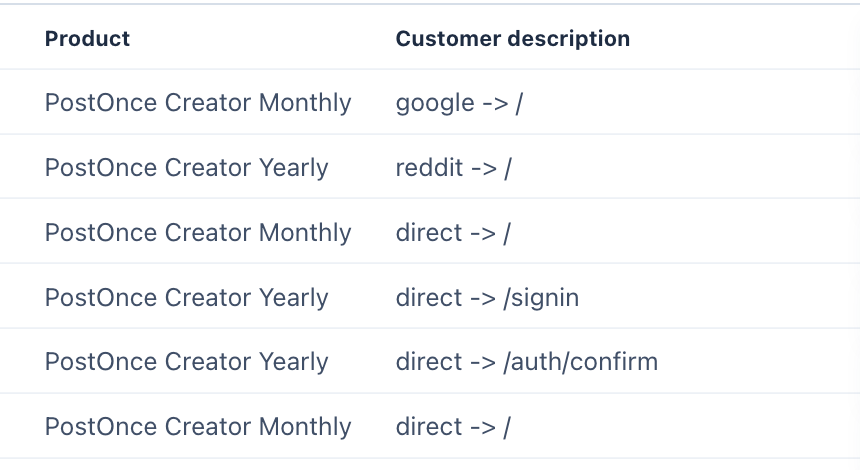
This isn’t as random as it seems! Dating as far back as last fall, one of Stripe’s product leaders put out a call for design partners who spend heavily on search and social.

Now, it looks like they’ve started to build something that should make many technology companies nervous and marketers pretty intrigued!

Much like Cloudflare’s GEO play, if this were just basic attribution of Google and Meta campaigns bundled into payments reports, it isn’t all that interesting. But I can’t imagine Stripe would care to stop there. Their core mission is to help merchants grow faster (or increase the GDP of the internet in Stripe parlance) which in turn directly increases payment volume on Stripe’s platform. As the machines eat media buying, I reckon Stripe wants a piece of that action to increase the share of merchant activity where they add value.
Stripe has an interesting right to win with marketing leaders if they build an agent that can buy ads. They see the actual revenue, recurring payments, refunds, churn, and true customer lifetime value of transactions from merchant payment data. Who knows what will become of click-based conversion signals? The payment layer is eternal.
Both Cloudflare and Stripe have significant access to first-party data—directly at the point of transaction and now inference—that a generation of software companies mostly took an educated guess at. They are, to borrow the famous turn of phrase uttered to the Google founders by Viacom CEO Mel Karmazin, once again “fucking with the magic.” Only this time it’s a lot of legacy middleware SaaS rather than the media industry in the crosshairs.
A few more things on my mind….
OpenAI wunderkind Gabriel Petersson launched a new company called Energy that appears to mostly be ChatGPT for Work / Codex wrapped in a more user-friendly interface. At first glance, it seems primarily like a narrative arbitrage for people who don’t already know what existing harnesses can do? And it might work?
In our last newsletter, Noah’s first “things he thinks he thinks about AI were:
1. Everyone is going to be working in harnesses (Codex, Claude Code, etc.) in the future.
2. I’m not sure if that harness-first future is 6, 12, 18, or 24 months out.
I agree wholeheartedly on both fronts. And I wonder if there just may be a weird window between mostly browser based work now and when everything just happens in Codex or whatever enterprise harness where little upstarts like Energy can sneak in and build incredibly valuable companies.
Per Digiday, Perplexity has blocked Time’s ads served to AI agents, calling them “deceptive.” The framing here is a little rich from Perplexity, considering that the company was the first AI search platform to enthusiastically roll out ads back in 2024. When their efforts stumbled, they became crusaders of the sacrosanct, ad-free AI-search experience.
That said, it does expose a fundamental issue of incentive alignment among different parties in the “selling ads to agents” business model. Foundation models and other AI search platforms will understandably be hesitant about any offering that makes it feel like there are easy ways to influence their search index! At the same time, agentic search will ultimately dwarf human web search in volume and it’s pretty naive to imagine this will all happen without an advertising layer baked in.
Like many other things around AI, this is all so early.
Gartner’s “Magic Quadrant for AI-Augmented Code Modernization Tools” is the corporate performance art piece of the year. Someone tell Dario and Elon they are cooked.
Tim O’Reilly penned a fascinating response to SemiAnalysis’s take that Google is no longer a frontier research lab, evoking George Westinghouse’s bet on AC generators to diffuse electricity through society. Both pieces are well worth a read.
The Onion continues to thrive in its rejection of AI and embrace of physical newsprint, the only company I can think of that has found success in the “artisanal, anti-AI” brand positioning.
At some point, you have to wonder if a declining, ZIRP-valuation SaaS business with few other options is going to take a stab at this counterpositioning playbook. Reject all AI-first and conversational chat experiences in their product and position their tool as the easel for people who love truly “doing the work” and building things themselves with software.
It will be near impossible to pull off– even Canva’s power users are decamping for ChatGPT Images. But for a founder at the brink, it may be more fun going out in a blaze of glory than having their silverware contorted by a group of Italian private equity barons on the way down.
If you have any questions, please be in touch. As always, thanks for reading.
— Mike
"Vibe coding is thinking". Put that on a T-shirt and I'll buy it (and likely get into public debates).